Hole Stars: Puzzle Game
- 4.7
- Rating
- 5.00M
- Installs
- Free
- Price
 Analysis by App-foxy
I went into Hole Stars expecting a simple puzzle game built around one unusual idea: controlling a hole that swallows objects. That idea is the entire reason to try it, and it gives the game a very different feel from the usual match-three boards, word challenges, or physics puzzles. Instead of selecting tiles or arranging pieces, I guide the hole through each scene and decide what should disappear next.
That sounds almost effortless, but the appeal comes from turning a basic action into a small planning exercise. The hole is not just a visual gimmick. Its movement, position, and the order in which I approach objects determine whether a level feels smooth or awkward. I found myself switching between quick reactions and short-term thinking: sometimes the obvious object was the right target, while at other times I had to clear space first so the hole could reach something else.
Moon Active presents the game as a free puzzle experience for everyone, and it is available for Android devices running at least Android 6.0. The game has already passed over one million installs, with a 4.7 average from around 37 thousand ratings. Those figures suggest that the central concept connects with a broad audience, but they do not remove the need to ask whether this particular style suits you. In my experience, the answer depends on how much you enjoy short, tactile puzzles rather than deep, story-heavy challenges.
You May Also Like

 Blood Strike: 2.5 Anniversary
Blood Strike’s Loadouts Turn Every Drop Into a Tactical Gamble
A close look at Blood Strike’s custom loadouts: how fast access to signature weapons reshapes its battle royale rhythm, rewards preparation, and narrows the gap between fights.

 Pandora - Music & Podcasts
Pandora’s Music Is Easy to Start, but Harder to Recover
Pandora’s strength is its low-effort path from a seed to a station. Its weak spot is how much confidence it asks you to place in connection, setup, and quiet recovery.

 8 Ball Pool
 Is Built on Rivalries, Rematches, and Routine
A close look at the rivalries, rematches, shared routines, and unanswered safety questions that turn a quick pool match into a persistent mobile community.

 Samsung Music
’s Quiet Strength Is Playing What You Already Own
Its reach comes less from spectacle than from dependable access to a personal library. That simplicity is both the app’s strongest retention engine and its ceiling.

 AccuWeather: Weather Radar
AccuWeather Review: A Quick, Clear Forecast for Everyday Decisions
For everyday plans, the best forecast is the one you can understand quickly. AccuWeather makes rain timing, radar, and local conditions easy to act on, with a few trade-offs.

 Hill Climb Racing
Why Hill Climb Racing Still Turns Crashes Into One More Run
A tiny car, a bumpy hill and one more upgrade: Hill Climb Racing keeps resurfacing because its simple chaos makes every near-miss feel personal.
More From Our News Desk



Swallowing objects is the puzzle, not just the presentation
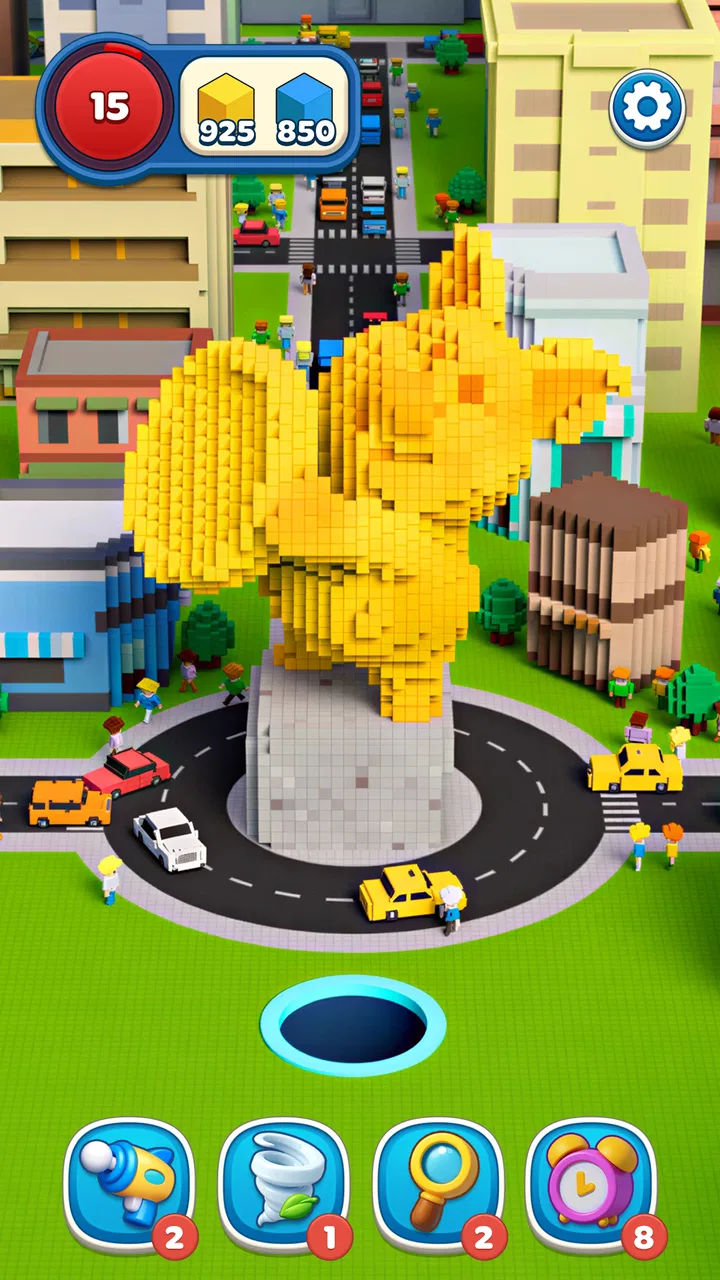
The strongest capability here is the hole itself. It changes the usual puzzle relationship between the player and the board. In a conventional tile game, I usually think about colors, patterns, matching groups, or a limited number of moves. Here, I think spatially. I look at the layout, judge where the hole can travel, and consider which objects are practical to remove first.
That difference matters because the game makes progress feel physical. Watching objects vanish gives every successful movement immediate feedback. I am not waiting for a complicated chain reaction to understand whether a choice worked. The board changes in front of me, and that makes even a small decision feel active. For quick sessions, this is much more satisfying than a puzzle that requires a long setup before anything happens.
The hole also creates a useful sense of scale. Objects that seem too large at first can become manageable as the board changes, while smaller items are natural early targets. This gives the player a simple visual language to read without needing a lengthy tutorial. I can usually understand what deserves attention by looking at the scene, which is one reason the game is easy to pick up.
The important skill is not swallowing everything immediately; it is choosing the order that keeps the board open. That is the insight I found most useful after playing for a while. Rushing toward the nearest object can leave the hole in an inconvenient position, while a slower route can make the remaining targets much easier to reach. The game rewards awareness more than memorizing complicated rules.
Why the central idea feels different from ordinary puzzle games
Most familiar puzzle alternatives focus on arranging information. Match-three games ask me to search for combinations, word games ask me to recognize language patterns, and traditional logic puzzles often reward deduction from fixed clues. Hole Stars instead asks me to manage movement and space. It is closer to a small interactive cleanup problem than a static brain teaser.
That makes it a good choice when I want something visually immediate. I do not need to study a grid for a long time before making a move. The scene communicates its challenge through placement and access. At the same time, people who prefer elaborate chains, complex clues, or a strong narrative may find the concept too narrow. The hole is memorable, but the game is built around repeating that one interaction rather than constantly introducing a new type of puzzle.
I also like that the premise works without requiring a serious tone. There is something naturally playful about making a hole consume the environment. That makes the game approachable for younger players and casual users, which fits its Everyone content rating. It is the kind of title I can hand to someone who does not normally play puzzle games and expect them to understand the basic appeal quickly.
How I approach a level in practice
My most reliable method is to pause for a brief visual scan before moving. I check the objects nearest to the hole, then look for anything that could block a more useful route. This takes only a moment, but it prevents the most common mistake: treating the first visible target as the only target that matters.
I usually begin with objects that are easy to reach and unlikely to interfere with the rest of the scene. That gives me room to reposition and makes the next decision clearer. If I focus on a difficult target too early, I can spend more time correcting my path than solving the actual puzzle. The game is forgiving enough to feel casual, but a little planning still improves the experience.
A second useful habit is to think in routes rather than individual objects. Instead of asking, “What can I swallow now?” I ask, “Where will the hole be after this?” That small change in perspective makes the controls feel more deliberate. A move is valuable not only because it removes something, but because it places me closer to the next useful area.
This is especially helpful when several objects are clustered together. Clearing the edge of a group can create a better approach than attacking its center. I found that working around a cluster often produces fewer awkward movements. It is a modest tactic, but it turns the game from random sweeping into a repeatable process.
A practical routine for short sessions
Hole Stars works well when I have only a few minutes, such as while waiting for an appointment or taking a break between tasks. I can start playing without committing to a long story or learning a large ruleset. The central action is immediately understandable, and the visual feedback makes it easy to stay engaged even during a brief session.
For that kind of use, I recommend playing with a simple goal: solve the current challenge cleanly rather than rushing for speed. Quick movement can feel exciting, but it also makes it easier to miss a better route. When I slow down just enough to inspect the layout, the game becomes more relaxing and less like a reflex test.
Another practical tip is to stop after a frustrating attempt instead of repeating the same route automatically. Because the challenge is spatial, repeating an unsuccessful path without changing the plan rarely helps. A short reset gives me a chance to notice an object or opening I ignored. This is one of the game’s quieter strengths: improvement comes from seeing the scene differently, not from grinding a complicated skill tree.
The game is free to download, but it includes in-app purchases ranging from $0.59 to $99.99 per item. That range is worth remembering before allowing a child to play or handing the device to someone else. I would treat the free entry as a way to test the core puzzle rather than assuming every part of the experience will remain completely separate from optional spending.
The best setting for this kind of puzzle
The strongest scenario for me is relaxed, low-commitment play. If I want a game that can fill a spare moment with a clear objective, the swallowing mechanic works very well. I do not need to remember a complicated plot or rebuild a strategy from a previous session. I can look at the current scene, make a plan, and enjoy the immediate result when the hole clears the area.
It also suits shared play in an informal way. I can imagine passing the phone to a friend or family member and discussing which object should be targeted first. The visual premise is easy to explain, so the game does not create the barrier that some puzzle titles do when their rules are hidden behind several menus or tutorials.
For younger players, the straightforward interaction is a benefit. The Everyone rating makes it suitable for a broad audience, although adults should still pay attention to the presence of optional purchases. The game can encourage basic spatial reasoning without presenting itself as a lesson. Children who enjoy watching objects disappear may be drawn in naturally, while adults can appreciate the small decisions behind the movement.
I would also recommend it to players who enjoy satisfying visual actions more than abstract problem solving. There is a direct connection between input and result: move the hole into position, and the object vanishes. That physical clarity gives the game its personality. It is less suitable for someone who wants a puzzle that can be solved entirely through written logic or numerical deduction.
When another puzzle style is a better fit
If I am looking for a long-term competitive challenge, I would probably choose a different category of puzzle game. Hole Stars is built around an accessible interaction, so its appeal comes from the moment-to-moment process rather than from a large strategic system. A dedicated match-three game may be better for someone who enjoys planning elaborate combinations, while a word puzzle may offer more variety for a player who wants language-based difficulty.
It is also not my first choice when I want a strong narrative reason to keep playing. The hole provides a clear identity, but the attraction is mechanical. Players who need characters, dialogue, or a developing story may find the experience too focused on its central action. That is not a flaw in the concept; it is simply the trade-off that keeps the game easy to understand.
There is a similar trade-off with difficulty. The game’s accessibility is one of its strengths, but players who want punishing puzzles may eventually want something more demanding. I would choose this title for comfort, immediacy, and short bursts rather than for an intense test of advanced logic.
The friction points I noticed while playing
The biggest limitation is also the game’s defining feature: there is only one main idea to learn. That makes the opening approachable, but it can also make the experience feel repetitive if I play for too long in one sitting. I get more enjoyment by treating it as a series of short sessions rather than trying to turn it into an all-evening game.
The visual simplicity can create another small issue. When several objects sit close together, I sometimes need an extra moment to judge the best path. The scene may look obvious at first, yet the most convenient target is not always the one that appears closest. That is manageable, but it means the game is not purely mindless. Players expecting automatic progress may be surprised by the need to think about positioning.
Optional purchases are another consideration. The game costs nothing to start, which lowers the barrier to trying it, but the available purchase range is wide. I would recommend checking device purchase controls before letting a child use it unsupervised. For adults, the sensible approach is to play the free portion first and decide whether the added spending genuinely improves the way they want to play.
Device compatibility is relatively broad because the minimum requirement is Android 6.0, but anyone using an older phone should still keep expectations realistic about general performance. I would also install the current version, 220000.1.197, rather than relying on an outdated copy. Keeping the app updated is a practical step for avoiding problems that may come from running an old build.
One further trade-off is that the game’s appeal depends heavily on whether the swallowing action feels satisfying to you. If that visual loop does not click, there is not a separate story mode or radically different puzzle identity to compensate. I would not recommend downloading it solely because it is popular. The concept is distinctive, but distinctive does not automatically mean universally enjoyable.
Who gets the most from Hole Stars
I think the best audience is casual puzzle players who want an instantly readable mechanic with a little spatial planning underneath. It is a strong fit for people who enjoy clearing spaces, watching objects disappear, and making small route decisions without studying complicated instructions. The game is also approachable for families, provided adults manage the purchase settings.
It is particularly useful as a mental break because it gives me a contained task. I can play actively for a short time, finish a challenge, and put the phone away without feeling that I have abandoned a large ongoing system. That makes it more convenient than puzzle games that depend on long sessions or require constant attention to a growing collection of resources.
Players who should skip it are those seeking deep narrative content, highly technical logic problems, or a broad range of unrelated mechanics. They may enjoy the first encounter with the hole but lose interest once the novelty settles. I would also suggest avoiding it if you dislike free games with optional purchases, even when you have no intention of buying anything.
Moon Active has chosen a clear direction rather than trying to make this a general-purpose puzzle collection. In my view, that focus is why the game is easy to recommend to the right person. It knows what its central interaction is and builds the experience around it. The cost is variety, but the benefit is immediate understanding.
After spending time with it, my advice is simple: try it if the idea of navigating a hole through a scene sounds amusing and you prefer short, visual puzzles. Start slowly, plan the next position instead of chasing the nearest object, and treat the game as a compact break rather than an endless commitment. With that expectation, the experience is pleasant, accessible, and more thoughtful than its playful premise first suggests.
Hole Stars is not the puzzle game I would choose for every mood, but it has a clear reason to exist. Its swallowing mechanic changes how I read a level, and that small shift gives ordinary object removal a satisfying sense of movement and choice. For casual players who want a free game with an unusual hook, it is worth trying; for people demanding deep variety, a more traditional puzzle alternative will probably be the better match.
FAQs for Hole Stars: Puzzle Game
01What is the main objective of Hole Stars: Puzzle Game?
The primary goal of Hole Stars: Puzzle Game is to navigate various levels by strategically swallowing objects with a black hole to clear the path. Each level presents unique challenges and obstacles, requiring players to think critically and efficiently manage the black hole’s movement to progress.
02Is Hole Stars: Puzzle Game suitable for all ages?
Yes, Hole Stars: Puzzle Game is designed to be family-friendly and is suitable for players of all ages. The game offers intuitive controls and a gradual increase in difficulty, making it accessible for younger players while still being challenging for adults. However, parental guidance is recommended for very young children.
03Does Hole Stars: Puzzle Game require an internet connection to play?
Hole Stars: Puzzle Game primarily operates offline, allowing players to enjoy the game without an internet connection. However, certain features such as in-game purchases or leaderboard functionalities may require a connection. Players can enjoy the core gameplay experience without being connected to the internet.
04Are there in-app purchases in Hole Stars: Puzzle Game?
Yes, Hole Stars: Puzzle Game offers in-app purchases that enhance the gaming experience. Players can buy additional skins, power-ups, and level packs to customize their gameplay. While these purchases can provide additional features, they are entirely optional, and the game can be completed without spending real money.
05What platforms is Hole Stars: Puzzle Game available on?
Hole Stars: Puzzle Game is available for both Android and iOS devices. It can be downloaded from the Google Play Store for Android users and the Apple App Store for iOS users. The game is optimized for a wide range of devices, ensuring smooth performance and an enjoyable gaming experience across platforms.
Pros
- Engaging and addictive gameplay.
- Simple controls for easy play.
- Visually appealing graphics.
- Regular updates with new levels.
- Suitable for all age groups.
Cons
- Contains frequent ads.
- Requires internet for some features.
- Limited in-game customization.
- Can be repetitive over time.
- Some levels are overly challenging.

Hole Stars: Puzzle Game
Gallery